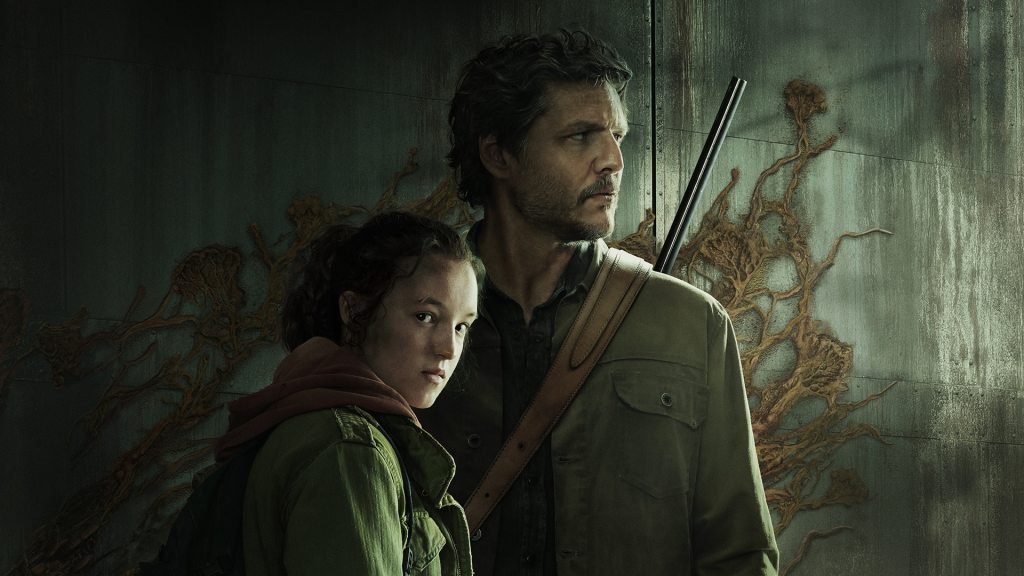
Photo curtesy of HBO
You want to create a story? Honestly, it’s not that difficult. Let’s create one together. I promise, it’ll only take a minute.
First, we need characters. I vote we keep it simple and start with two. How about a man and a girl?
Next up, we need a plot. I’m thinking a cross-country excursion because who doesn’t love a good roadtrip. Of course, no one is going to enjoy a story where the most interesting thing to happen is the license plate game. No, we need a conflict and what better conflict than a zombie apocalypse?
Now that we know what our two characters are up to and why, we can safely assume the setting is a disheveled and broken world where survival means doing anything necessary. Geographically, let’s toss our duo in middle America. If you’ve ever been to a Nebraskan Walmart on Black Friday, you know survival-by-any-means is already on the table in the corn belt.
What are we missing?
Ohh that’s right, a theme. We said our characters were trying to survive, that’s a theme, right? I mean, I’d probably watch a few seasons of a show about an unlikely duo on the road kicking zombie-ass and taking zombie-names. I might even play a video game based on the concept.
What’s that? Our story already exists? And it’s in the title of the article? Look at you reading like a champ.
You got me. The story we just pulled together is an extremely basic summary of The Last of Us, HBO’s latest mega-hit based on the acclaimed video game series. The show continues nearly unprecedented growth in popularity and viewership as it rounds the halfway point of its 9-episode first season.
So why is a story about a zombie apocalypse taking the world by storm?
You forgot the word again in that question.
Don’t forget that The Walking Dead, a tale about a group of people looking for a place to call home in the midst of a zombie outbreak, just wrapped up an 11-season run in November. (Not to worry, as the title suggests, the dead never die thanks to multiple spinoff projects currently in the works.)
In fact, people have been fascinated with zombies for a long time. George A. Romero’s Night of the Living Dead brought carnivorous corpses to the big screen in 1968. The history of the zombie is much, much older, but here we are in 2023, a historic global pandemic still fresh in our minds and lungs, consuming a zombie show like it’s our last meal.
I’ll lay my cards out on the table; I haven’t played the game. I don’t know where the series is headed, but I do know that for it to remain a success, relationships need to remain as important in future episodes as they have been in the first handful.
This is going to be spoilery from here on out, so if you’ve yet to watch Episode 5, “Endure and Survive”, turn back now.
Episode 1 opens with a focus on Joel, our first main character played by the wonderful Pedro Pascal, and his relationship with his daughter Sarah. Money is tight, but they have each other, so life could definitely be worse which means it’s about to be.
Right on cue, the outbreak begins and Joel, his brother Tommy, brought to life by Gabriel Luna, and Sarah hit the road in an attempt to outrun the inevitable.
Unfortunately, it’s inevitable for a reason and the trio is slowed first by zombies, then the military, then other people and then more zombies before Joel and Sarah find themselves staring down the barrel of a soldier’s gun. Kill anyone who might be infected are the orders from up top. The soldier does as he’s told and moments later Sarah dies of a gunshot wound in her father’s arms.
Holy emotional roller coaster Batman!
Sorry, that’s just the first 35-minutes of Episode 1. Take out the prologue and we only know Sarah for about 30-minutes, but still, the impact of her loss is heavy. The majority of that time is spent with Sarah and Sarah only. Joel leaves for work in the morning and returns late at night only to be called away again. Our first interaction with a zombie comes with Sarah. As viewers, we experience that fear with her first. We also see that Joel’s focus is to protect his daughter from that fear. Minutes later, she’s gone.
The message is clear: don’t get attached. The irony is that from there, the show’s singular goal seems to be creating attachments both for the characters and viewers.
Twenty-years later Joel is a hardened survivor looking for Tommy with the help of his partner, Tess. Due to some shady business dealings, Joel and Tess agree to deliver Ellie, portrayed on-screen by Bella Ramsey, to a rebel group outside the safety of Boston’s quarantine zone. (Turns out Ellie is zombie-proof which is pretty handy in a world ravaged by the undead.)
Episode 2 brings us outside the QZ where our plucky trio navigate the broken remains of the city and, you guessed it, zombies. The set pieces are beautiful, the action scenes are slick and the banter is witty; we can’t wait to watch these three on their journey!
Think again, dear reader, because Tess doesn’t make it out of Episode 2 thanks to a bite from a pesky Clicker. In the span of roughly two hours, we’ve seen two of the three most important people in Joel’s life die, with the third missing somewhere in Wyoming.
At the very least, we now have an opportunity to get to know Ellie a bit more and watch her and Joel form a relationship of their own.
Not so fast.
Episode 3 introduces us to Bill, a heavily bearded Nick Offerman, and Frank, an equally folicaled Murray Bartlett. Joel and Ellie are relegated to bookending an episode of their show before they even get to know each other. Weird creative choice right?
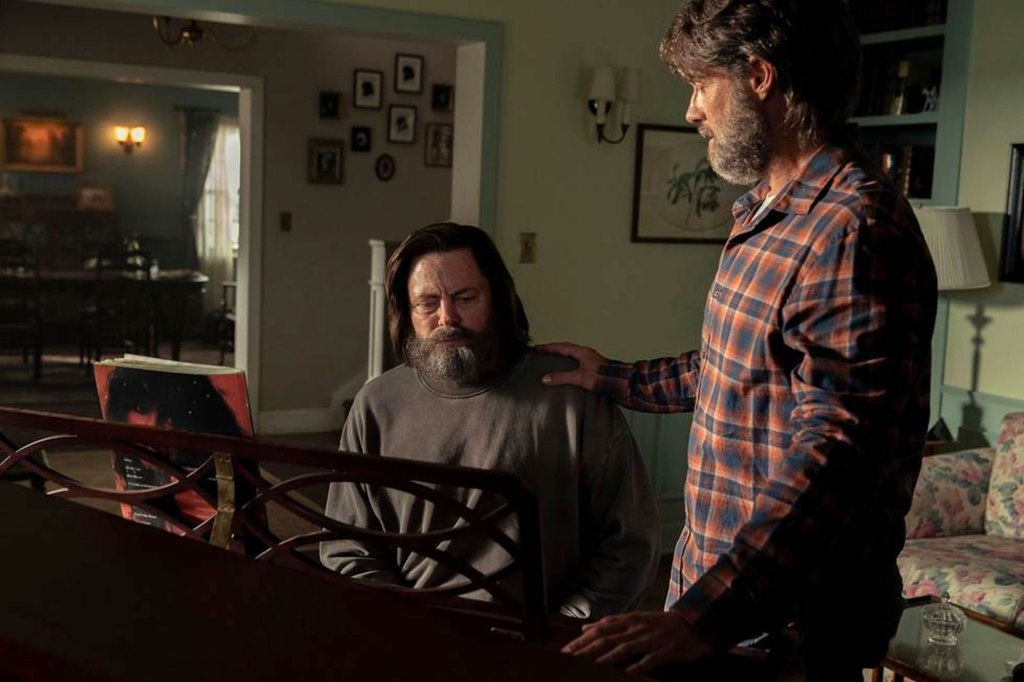
Wrong.
“Long, Long Time” is the most emotionally poignant piece of television since Futurama made you cry with that episode about the dog.
We’re treated to an unlikely love story where the zombies are minimal, other humans are a nuisance, and ultimately, the real antagonist is time.
Through three episodes, The Last of Us gave the audience seven characters to care about; Joel, Sarah, Tommy, Tess, Ellie, Bill and Frank. By the start of Episode 4, one is dead at the hands of a trigger happy soldier, another thanks to an unpleasant kiss with an infected, and two more because even if you avoid people and things that used to be people, time comes for everyone.
The season’s fourth installment, “Please Hold My Hand”, carries some much-needed water in allowing Joel and Ellie to begin forming a bond. It’s tentative and somewhat rocky, but at least the seeds are planted.
Surely, surely episode 5 will continue this emotional reprieve?!
Of course not! Instead, we meet Henry and Sam, brought to us by Larmar Johnson and Keivonn Montreal Woodard respectively, a duo of brothers on the run from the rebel group that has taken over Kansas City.
The pair hold a mirror up to Joel and Ellie; a father figure doing what he can to get his ward through an impossible situation while still maintaining some shred of the child’s innocence. Mutual respects and friendships are formed and after the most intense zombie sequence to date, our group of travelers find themselves holed up in a motel, an agreement to journey on together as imminent as the sunrise.
Of course when the happy ending comes with 10-minutes left in the episode, it’s not really the ending.
Nor is it happy.
It turns out that young Sam has been bitten and as the infection takes over, an adrenaline fueled Henry shoots his brother in the head. Upon realizing what he’s done, and without taking the time to consider the fact that Sam was beyond saving, Henry turns the gun on himself and ends his own life.
Two more characters to love, two more in the ground.
At some point, these people we’re introduced to, the people that might be able to help Joel and Ellie, to provide them with resources and companionship, have to stop dying, right? Again, I don’t know, but I doubt it.
This is a simple story after all; a man and a girl, a cross country trek, a zombie apocalypse. But it’s not that simple. The Last of Us is a story about the importance of relationships, even if they are fragile and fleeting.
As the season wears on, expect more heartbreak and loss. More characters presented for you to love only for them to be ripped away. Those characters, and the bonds they form, are important because the more you feel their loss, the more the growth of Joel and Ellie’s relationship means.
 Sam Zwick
Leave a comment